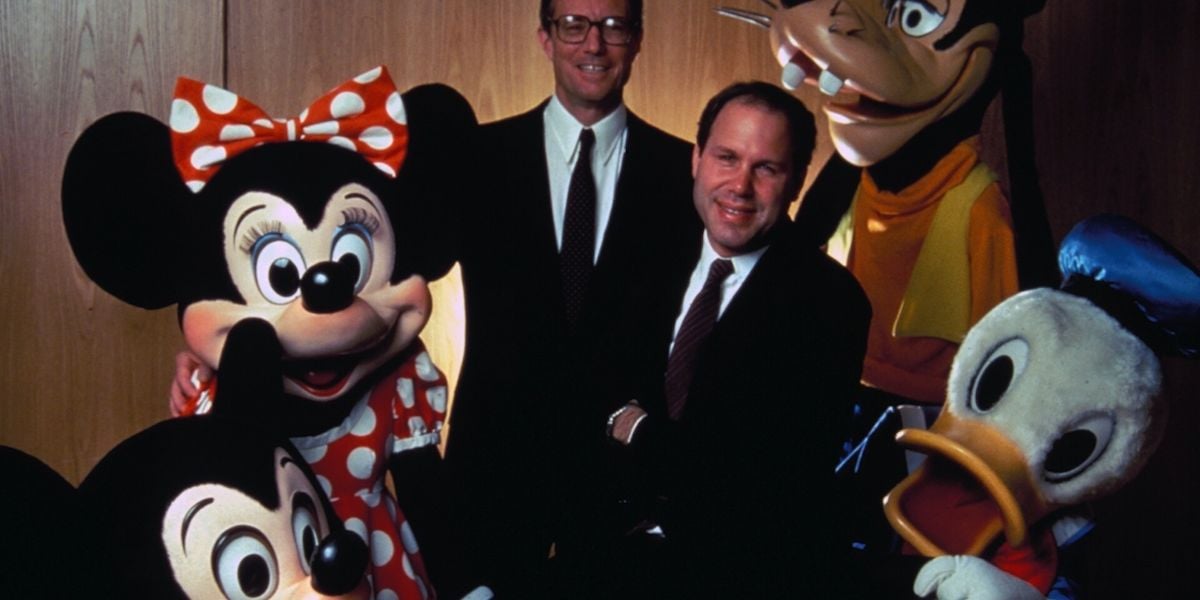
Michael Eisner's roughly two decades running Disney represent one of the most consequential stretches in the company's history. He took the helm in 1984 and oversaw an extraordinary period of growth — the Disney Renaissance transformed animation, new theme parks opened around the world, Disney expanded its television presence, and the company became a far larger force in Hollywood.
Now 84 years old and nearly 21 years removed from stepping down as CEO in September 2005, Eisner is looking back at one area where he believes Disney — and Hollywood as a whole — got things seriously wrong. And his reflections carry some surprisingly relevant lessons for Disney in 2026.
Eisner Admits Hollywood Got Gaming Wrong
During a recent Paley Center for Media discussion titled "Sports in the Gaming Era," Eisner addressed Hollywood's complicated history with video games. His assessment wasn't particularly forgiving.
"We all failed," Eisner said. "We ended up licensing. That's how we succeeded."
Eisner wasn't singling out Disney alone. His argument was that traditional entertainment companies broadly struggled to take the intellectual property they already owned and successfully move it into an entirely different medium. Video games presented an especially difficult challenge.
He pointed back to Warner Bros.' experience with Atari in the 1980s as an early example of Hollywood's stumbles. According to Eisner, entertainment executives simply weren't equipped for a business so heavily dependent on technology.
Gaming "was so technologically driven in the beginning, which was not the strong suit of any of us," Eisner explained.
Eventually, Disney and other entertainment companies found a more practical path forward: rather than building everything themselves, they licensed their characters and franchises to companies that already understood gaming. It worked — but the industry has changed dramatically since then.
Disney's Biggest Strength Became IP
Eisner believes today's gaming landscape is far better suited for a company like Disney, and the reason comes down to one word: story.
"Now it's story-driven," Eisner said. "Now it is IP-driven."
That distinction matters enormously, because intellectual property has become arguably Disney's most valuable asset. Disney can take a beloved character or story and extend it across movies, television, merchandise, theme parks, games, and countless other businesses.
"We all take the IP that we made and put it in a place where you can enjoy it," Eisner said. But he added an important caveat: "At a certain point in your life, you have to make the IP the new IP."
That second part is worth sitting with, especially when looking at Disney in 2026. The company owns an extraordinary collection of established franchises, but it has also faced years of questions about whether it leans too heavily on familiar characters, sequels, remakes, and extensions of existing brands.
Eisner Once Didn't Believe in Sequels
Interestingly, Eisner admits he once held almost the opposite philosophy. Before and during the earlier stages of his career, he strongly preferred original entertainment.
"I never believed in sequels," Eisner said, describing his philosophy as "everything's going to be original."
His Disney tenure certainly produced plenty of original hits. The Little Mermaid (1989), Beauty and the Beast (1991), Aladdin (1992), and The Lion King (1994) weren't extensions of existing Disney film franchises — they became franchises because audiences embraced them. Over time, however, Eisner came to appreciate just how valuable recognizable properties could become, a realization that has since transformed Disney's entire business.
Eisner Points to Star Wars as a Disney Success
Although Eisner had already left the company when Disney began its major acquisition spree, he now considers one of those purchases among Disney's smartest moves. He specifically praised Disney's acquisition of Lucasfilm and Star Wars.
"We had nothing in the last 20 years, so we bought Star Wars from George Lucas and that worked," Eisner said.
His description was something of an exaggeration — Disney also acquired Pixar in 2006 and Marvel in 2009 before purchasing Lucasfilm in 2012. Still, Eisner's larger point centered on the enormous loyalty that surrounds established franchises.
"They are so committed to the IP that I realize that there are certain kinds of things that are worth doing," Eisner said of fans.
Disney has spent much of the past decade putting that philosophy into practice. Star Wars expanded through theatrical releases, Disney+ series, merchandise, video games, and major theme park investments. Marvel followed a similar path, while Disney increasingly turned animated films into larger franchises spanning sequels, streaming projects, live-action adaptations, attractions, and consumer products.
But Eisner also sees danger in taking that strategy too far.
Eisner Thinks Disney May Have Gone Too Far
Perhaps the most striking part of Eisner's comments involves Star Wars directly. He warned that established intellectual property can give companies an easier path into new businesses, but that eventually they need to create something audiences haven't seen before.
"The key is after you have five or six IPs, you make a great game that nobody's ever heard of," Eisner said. "It'll be a giant game. But it's going to take a while."
He called franchise licensing "a great way to get in," but cautioned against endlessly returning to the same properties. Eisner even suggested Disney may have "overstepped its bounds" with Star Wars because of the sheer number of sequels and extensions surrounding the franchise. That's a striking observation coming from someone who once ran the company.
Disney Is Still Trying to Find the Right Balance
Disney's original challenge was figuring out how to bring its stories into emerging forms of entertainment like gaming. Licensing eventually provided an answer. Now, the challenge has almost reversed.
Disney understands the value of intellectual property exceptionally well. The harder question is how long the company can keep extending familiar franchises before audiences begin wanting something genuinely new. Eisner's comments suggest that successful IP should serve as a foundation — not become the entire strategy.
The technology has changed. Disney has changed. Gaming has changed dramatically. But the underlying challenge Eisner described hasn't disappeared. Disney still has to decide when to rely on the characters and franchises audiences already love — and when to take the much bigger risk of creating the next one.
What do you think has been Disney's biggest challenge when it comes to balancing familiar franchises with original stories? Let us know in the comments!