
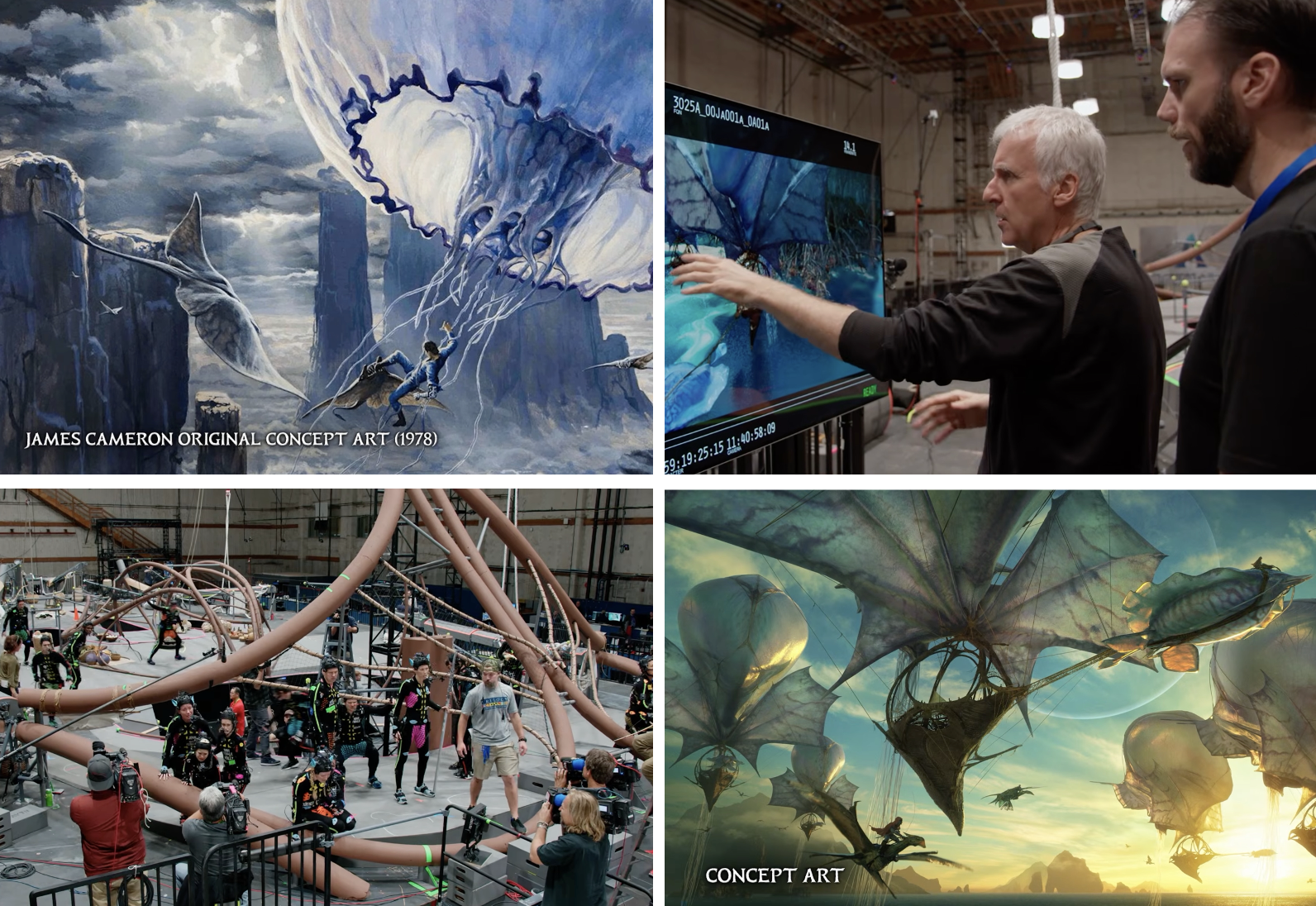
A new behind-the-scenes featurette for Avatar: Fire and Ash offers fans a detailed look at how the film's creative team approached the challenge of expanding Pandora — and the companion art book, The Art of Avatar: Fire and Ash, arrives July 21 to go even deeper.
Designing Pandora as "Science Fact"
The video centers on Dylan Cole, co-production designer for the Avatar franchise, who has been part of the series since the original film. Cole explains that the guiding principle behind Pandora's design isn't traditional science fiction — it's something closer to "science fact." Rather than creating alien environments simply because they look strange or fantastical, the team approaches Pandora with the seriousness of a nature documentary, working to give the world a sense of tactile, physical reality.
To achieve that, artists work across a wide range of tools: drawing, painting, sculpture, practical models, virtual reality, and more. The goal, Cole says, is to make Pandora feel like a place that genuinely exists.
Three Cultures, Three Design Languages
Avatar: The Way of Water and Avatar: Fire and Ash were developed together as one massive creative undertaking, which gave the design team the opportunity to clearly distinguish each culture from the others. The result is three distinct groups, each with its own visual identity:
- The Metkayina — tied to the reef and ocean, introduced in The Way of Water
- The Wind Traders — defined by motion, air travel, and bright, elevated construction in the skies and higher altitudes of Pandora
- The Ash People — rooted in a harsher volcanic wasteland, with colors, materials, and structures designed to reflect their environment of fire, ash, and survival
Cole notes that every design choice had to communicate culture, serve the story, and make efficient use of screen time. A single element might need to establish place, explain history, support character emotion, and guide the audience's eye — all at once.
Building the Wind Traders' Flying Vessel
One of the featurette's central examples is the Wind Traders' flying vessel. Cole explains that the gondola, the giant jellyfish-like medusoid, and the wind ray had to be designed as an interconnected system — something that felt like it could actually operate, not just a beautiful fantasy image.
For the gondola itself, the designers expanded on marui-style construction techniques, drawing on visual ideas like bent cane, lashings, ropes, and tied structures, scaled up significantly. The team even developed a kind of flight manual for the rigging, helping the performance-capture work feel more grounded by giving actors and filmmakers a real sense of how the craft functioned within Pandora's heightened reality.
James Cameron also pushed the team to keep the deck of the gondola visually and narratively accessible to audiences. The filmmakers drew on familiar pirate-movie language to give viewers an immediate way into the scene, even as the setting remained unmistakably Pandoran.
The Ash People and Their Burnt-Out Home Tree
The Ash People receive significant attention in the video as well. Cole says the team added a burnt-out home tree as a visual anchor for their environment. The structure serves multiple purposes at once: it gives the audience a landmark, suggests the clan's history, and helps explain their resilience in the wake of catastrophe. By showing what the Ash People lost, the design also gives viewers a way to understand and sympathize with them.
Sacred Spaces and the Cove of the Ancestors
Cole also discusses the design of sacred spaces, including the monument at the Cove of the Ancestors. The team looked at familiar Avatar visual language — sacred trees and archways — then inverted those ideas for an underwater setting. By flipping the arch form into a C-shape, the designers created a backdrop that supports the scene visually while still feeling connected to the franchise's established spiritual imagery.
Pandora as Metaphor
Cole closes the video by connecting Pandora's design back to the broader themes of the franchise. He describes the films as ultimately a metaphor for humanity's relationships with one another and with Earth, with the Na'vi's reverence for Pandora serving as a model for how audiences might think about their own world.
The Art Book and What's Ahead for Parks
The featurette serves as a preview of what fans can expect from The Art of Avatar: Fire and Ash, a 272-page hardcover art book by Chris Prince releasing July 21 from DK. The book features a foreword by Oona Chaplin and an introduction by Richard Taylor, with concept art and behind-the-scenes material spotlighting the creation of Pandora's new characters, creatures, clans, and environments. It's available for pre-order now.
The behind-the-scenes look also arrives as Disney prepares to bring a new Avatar experience to Disney California Adventure. The confirmed new land will feature a boat ride inspired by Avatar: The Way of Water and future Avatar films, rather than directly recreating Pandora – The World of Avatar at Disney's Animal Kingdom. Disney has described the attraction as a "thrilling excursion" to the open seas of Pandora, with concept art showing guests traveling by boat through bioluminescent environments and encountering massive Pandoran sea life. Notably, the concept art for the expansion appears to suggest that the Cove of the Ancestors featured in the behind-the-scenes video may be visible to guests as part of the backdrop or possibly an attraction facade for the coming boat ride.
Be sure to check out the full behind-the-scenes video on YouTube for more concept art and creative insights — and let us know on social media which part of Pandora's design in Avatar: Fire and Ash stood out to you most!