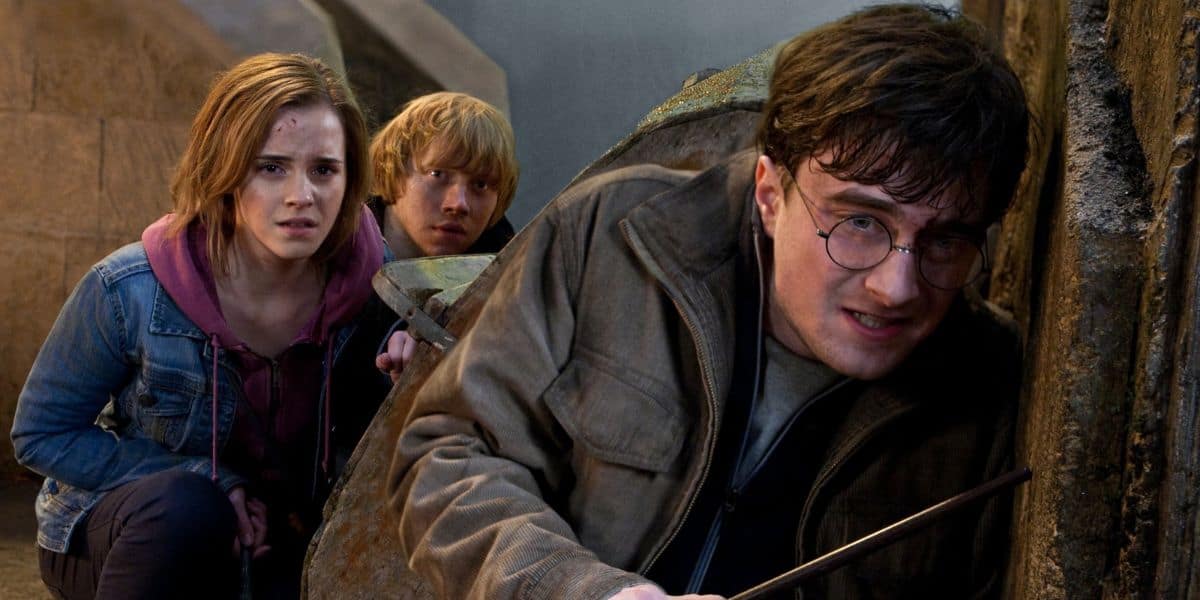
Twenty-five years ago, moviegoers stepped into Hogwarts for the very first time, and the Wizarding World has never really looked the same since. Harry Potter and the Sorcerer's Stone (2001) introduced Daniel Radcliffe as Harry, Emma Watson as Hermione, and Rupert Grint as Ron — and over the decade that followed, those actors, that castle, those house crests, and that distinctive visual style became completely inseparable from what Harry Potter is.
That created an unofficial rule that held for nearly 25 years: this is what Harry Potter looks like.
HBO is breaking that tradition — and a trailer released September 2 makes it very clear the network isn't simply remaking the movies with a few extra scenes. It's rebuilding the Wizarding World entirely. Four particularly significant departures from the film franchise have already divided fans.
1. Familiar House Emblems Have Been Redesigned
One of HBO's most noticeable changes actually began surfacing before the latest trailer dropped. All four Hogwarts houses — Gryffindor, Slytherin, Ravenclaw, and Hufflepuff — sport redesigned emblems for the television series. Rather than the traditional shield-style designs associated with the movies, HBO's new house imagery features circular emblems displaying each house's name, colors, and animal.
Gryffindor still has its lion. Slytherin keeps its serpent. Hufflepuff retains its badger. But Ravenclaw brings the biggest change of all.
Despite the house's name, J.K. Rowling's books associate Ravenclaw with an eagle — not a raven. The films famously used a raven in much of their imagery. HBO has restored the eagle, bringing the series back in line with the books.
For devoted readers, that's a welcome correction. For viewers who grew up with the movies, though, it replaces imagery they've associated with Hogwarts for decades. HBO can be more faithful to the source material while simultaneously feeling less familiar to millions of fans — and that tension is very real.
2. The Iconic Cast Has Been Completely Replaced
Then there's the matter of the faces. For nearly 25 years, fans have closely associated the Wizarding World's biggest characters with the actors who brought them to life on the big screen. Radcliffe was Harry. Watson was Hermione. Grint was Ron. Alan Rickman became synonymous with Severus Snape, while Richard Harris and later Michael Gambon each left lasting impressions as Albus Dumbledore — performances that lived on through merchandise, promotional material, and theme park attractions.
HBO has set all of that aside. Dominic McLaughlin now plays Harry, Arabella Stanton portrays Hermione, and Alastair Stout steps in as Ron. Paapa Essiedu takes on Snape, while John Lithgow steps into Dumbledore's robes.
Snape and Dumbledore in particular have generated heated discussion, given how strongly fans feel about their movie counterparts. Recasting was unavoidable for a complete reboot — but that doesn't make seeing someone else inhabit these iconic roles any less jarring.
3. Hogwarts Has a Different Visual Atmosphere
Casting isn't the only thing making the new Hogwarts feel unfamiliar. The show's visual presentation has also sparked debate. The original films weren't always brightly lit — especially as Harry's story grew darker — but the early movies balanced shadowy castles with warm colors and a storybook quality that felt distinctly magical.
Some viewers feel HBO's footage leans too heavily into a darker, desaturated gray-blue palette, prompting criticism that the reboot sometimes resembles a modern streaming drama more than the whimsical Wizarding World fans remember. Later promotional footage has offered richer, warmer imagery in places, but the visual debate hasn't gone away.
Hogwarts isn't merely a location — for generations of viewers, it carries a very specific atmosphere. Changing that could help HBO establish its own identity, but it also risks losing part of what made the original films feel so magical.
4. The Story Is Being Told Differently
Perhaps the most interesting shift involves how HBO plans to actually tell Harry's story. In the original book and film, the Wizarding World is discovered almost entirely through Harry's eyes. He knows nothing about magic, and audiences learn about Hogwarts, Diagon Alley, Quidditch, spells, and wizarding culture right alongside an 11-year-old who can barely believe any of it exists.
The television format gives HBO considerably more room to roam. The trailer points toward expanded scenes beyond Harry's immediate perspective — including more attention given to families like the Dursleys and the Weasleys.
For lore-focused fans, that's genuinely exciting. Television can spend more time on characters and situations that movies had to rush past or omit entirely. But others see a potential problem: if HBO spends too much time away from Harry, it could weaken that original sense of discovery. Showing audiences parts of the Wizarding World before Harry encounters them could fundamentally alter the pacing and the magic of experiencing it all for the first time.
A Major Gamble Premiering Christmas 2026
HBO couldn't justify rebooting Harry Potter by simply recreating everything Warner Bros. had done since 2001. It needs its own identity — and the redesigned houses, a completely new cast, a darker visual approach, and expanded storytelling show exactly how the network intends to build one.
Season 1, adapting Harry Potter and the Philosopher's Stone, premieres on Christmas 2026 on HBO and will stream on HBO Max where available. The first season will contain eight episodes. HBO plans to adapt all seven books across seven seasons, and work on Season 2 is already moving forward before audiences have even seen Season 1 — a major commitment, though seven planned seasons don't guarantee seven completed ones.
For now, fans have trailers, casting announcements, and redesigned pieces of a world they've known for nearly 25 years. This Christmas, they'll finally discover whether breaking those long-held traditions gives Harry Potter new life — or proves just how difficult the original films truly are to replace.