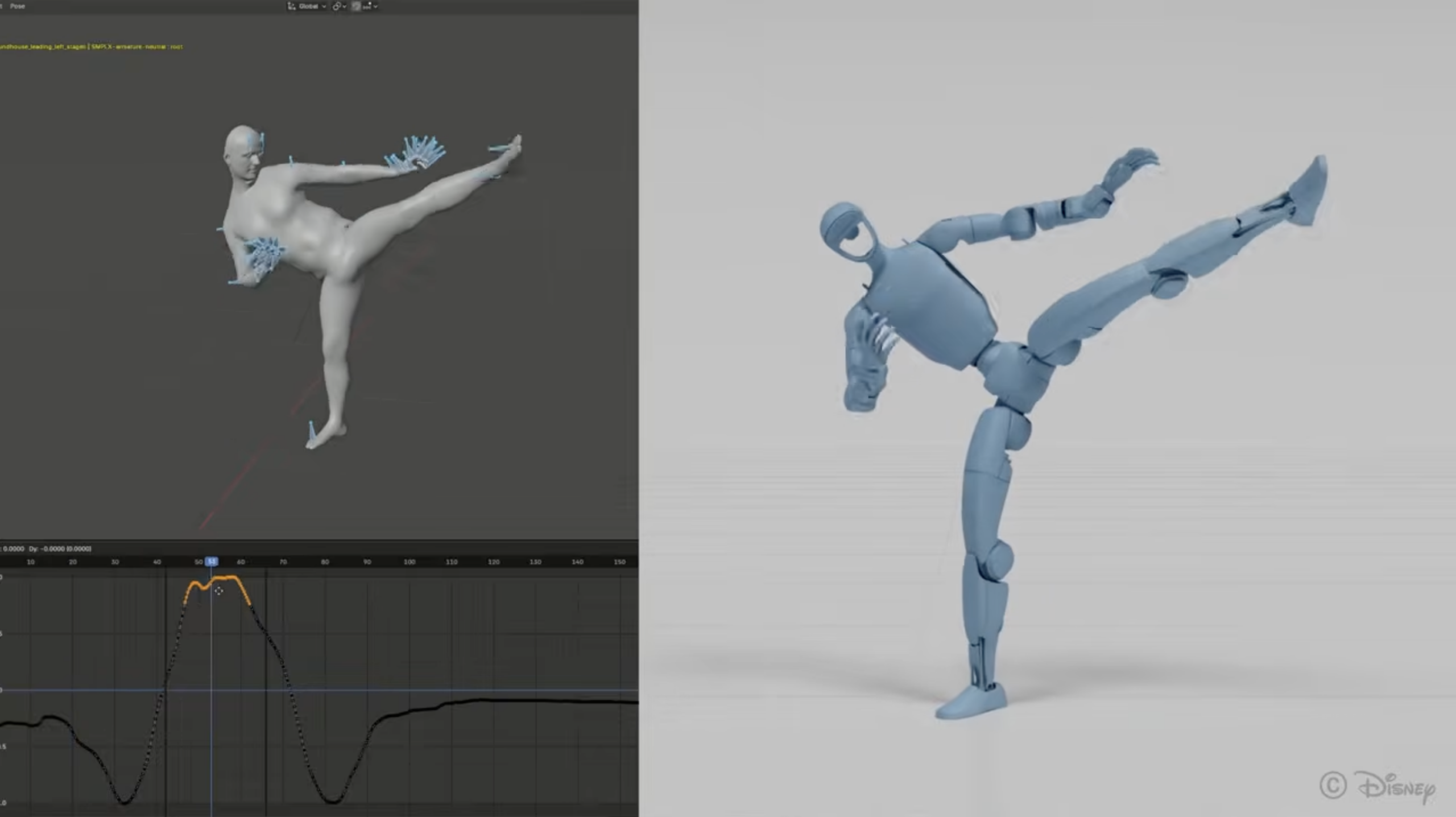
Imagine walking through Pirates of the Caribbean and seeing Captain Jack Sparrow not just speaking with Johnny Depp's voice, but moving with his exact swagger, gestures, and theatrical flair. This isn't science fiction—it's the future Disney Research is creating with their revolutionary "ReActor" system, a breakthrough technology that could transform how robots learn and replicate human movement.
For decades, Disney has been the undisputed master of animatronics, creating magical moments through Audio-Animatronics figures that have delighted millions of guests. From the singing birds in the Enchanted Tiki Room to the sophisticated presidents in the Hall of Presidents, Disney's robotic performers have evolved dramatically since their debut in the 1960s. But even the most advanced animatronics today rely on pre-programmed movements that, while impressive, lack the nuanced spontaneity of human motion.
The Magic Behind ReActor
ReActor represents a quantum leap forward in motion-learning technology. Unlike traditional robotic programming that requires painstaking manual coding of every gesture, ReActor can observe human movement and translate it to robots with completely different body structures and capabilities. This means a human performer's natural movements can be captured and adapted for everything from a bipedal humanoid robot to a four-legged creature or even abstract mechanical forms.
The system addresses one of robotics' most persistent challenges: the "uncanny valley" effect where robotic movement feels artificial or unsettling. By learning from human motion patterns, ReActor-equipped robots can develop more natural, fluid movements that feel authentic and engaging rather than mechanical and predetermined.
Beyond the Parks: Disney's Innovation Legacy
This breakthrough fits perfectly into Disney's long history of technological innovation. Walt Disney himself was fascinated by the intersection of technology and storytelling, famously declaring that "it's kind of fun to do the impossible." Disney Research, established in 2008, continues this tradition by exploring cutting-edge technologies that enhance storytelling and guest experiences.
Previous Disney Research projects have included:
- Advanced projection mapping systems that bring static surfaces to life
- Wireless power transmission for eliminating cables in attractions
- Tactile feedback systems for immersive experiences
- Computer vision technologies for interactive character encounters
Each innovation serves Disney's ultimate goal: creating more magical, immersive experiences that blur the line between fantasy and reality.
Transforming Tomorrow's Disney Experiences
The potential applications for ReActor technology within Disney's ecosystem are truly exciting. Imagine animatronic characters that can:
Adapt their performances in real-time: Characters could respond to crowd energy, adjusting their movements to be more energetic during busy periods or more intimate during quieter moments.
Learn from voice actors and performers: When recording new dialogue or performances, the same session could capture movement data, ensuring that animatronic figures move exactly like their human counterparts.
Create personalized interactions: Advanced versions might even adapt to individual guests, mimicking their gestures or energy levels for truly personalized magical moments.
The Broader Impact
While Disney's primary focus is entertainment, ReActor's implications extend far beyond theme parks. The technology could revolutionize industries ranging from healthcare (where robots need to interact gently with patients) to manufacturing (where human-like dexterity could improve precision tasks). Disney's commitment to sharing research findings means these innovations often benefit society as a whole.
The motion-learning capabilities demonstrated in ReActor could also enhance Disney's growing presence in streaming and digital entertainment. Imagine animated characters in Disney+ content that move with the exact mannerisms of their voice actors, creating unprecedented authenticity in digital performances.
Challenges and Considerations
Of course, implementing such advanced technology isn't without challenges. Disney must consider factors like maintenance complexity, guest safety, and the delicate balance between technological sophistication and the timeless magic that defines Disney experiences. The company has always been masterful at hiding technology behind storytelling, ensuring that guests focus on the magic rather than the mechanisms.
There are also creative considerations: how much human-like movement is optimal for different characters? A pirate might benefit from swagger and spontaneity, while a fairy tale princess might require more graceful, controlled movements. ReActor's flexibility could allow Disney Imagineers to fine-tune these characteristics for each unique application.
Looking Toward a Magical Future
As Disney continues to push the boundaries of what's possible in entertainment technology, ReActor represents more than just a technical achievement—it's a glimpse into a future where the line between human performers and animatronic characters becomes increasingly blurred. This technology could usher in a new era of Disney magic, where every robotic character moves with the grace, personality, and spontaneity that makes human performance so captivating.
The true magic of ReActor lies not just in its technical capabilities, but in its potential to create deeper emotional connections between guests and Disney characters. When an animatronic moves with genuine human-like qualities, it becomes easier for guests to suspend disbelief and fully immerse themselves in the story being told. And at the end of the day, that's what Disney magic is all about: creating moments where the impossible feels not just possible, but absolutely real.